Thursday, April 14, 2011

Tony Soprano: Novice?


You implyin' I dunno where to hide a body?

Funny quote from an article in today’s Times regarding New York’s Pelham Bay Park and its historical use as a body dumping ground for criminals, mob, etc…
“Even Tony Soprano knows — you go to the boondocks to get rid of the bodies,” said Walter Arnold, 65, a longtime resident of West Gilgo Beach on Long Island, more than a mile from where the police found a skull on Monday. “This is the boondocks.”
Well, no shit Tony Soprano would know that’s the best place to dump a body.  It’s Tony!  This is what he did for a living!  Now, the quote would have made more sense had it said “Even Snooki knows…” or “Even Rainbow Brite knows…” 
Next you’re gonna tell me you “could care less.” 

Wednesday, April 13, 2011

Does Social Networking Make You Feel MORE Left Out?

Interesting article in the Times last week about the personal inadequacy that social networking sites like Facebook or Twitter may tap into; exacerbating a person’s already volatile insecurity and tampering with their fragile ego.  In the discussion of how a plethora of information regarding friends’ social lives or careers appears on your Facebook wall and how it may effect you, the author noted the term FOMO which she describes as follows:
My problem is emblematic of the digital era. It’s known as FOMO, or “fear of missing out,” and refers to the blend of anxiety, inadequacy and irritation that can flare up while skimming social media like Facebook, Twitter, Foursquare and Instagram. Billions of Twitter messages, status updates and photographs provide thrilling glimpses of the daily lives and activities of friends, “frenemies,” co-workers and peers.
She followed up her article with a blog post wondering whether or not FOMO was a pre-existing condition (for lack of a better word) or if it’s a product of the digital age, to which I say, where the fuck have you been?  Jealousy brought on insecurity is hardly a new concept, in fact, it probably serves as basic motivation for most people. 
Regardless of the arrival of the phenomenon, I often do feel the same affliction as the author.  I sometimes find myself quickly skimming my Facebook wall hoping not to come across a friend’s amazing news about career advancement or whatever the thing is that may send me into a moment of self-loathing.  Once this quick scan is completed, I can then take my time and enjoy the Facebook experience without the fear of FOMO.  Perhaps this makes me an asshole, but really all it proves is that I’m an insecure human and this is just another tool to pick at said insecurity (which is probably true for most).  And until I feel accomplished and secure enough in my own accomplishments and social life (if ever), there will always be a twinge of anxiety when approached by a friend that may be armed with some news that may cause envy; and whether I find out said news via Twitter or in person is essentially irrelevant.  This is essentially something I've personally dealt with my entire life, and I'm fairly certain I'm not alone. 
So, sure, social networking may make it easier to access information that I may have never wanted to know, but in my experience, the stuff that would really bother me, I’d probably find out anyway somewhere down the line.  I suppose the immediacy of the information, combined with the volume of it is a possible hazard of social networking, but it’s certainly not a new phenomenon.

Monday, April 11, 2011

Why Do We Root For Tiger Woods?

Prior to 1997, watching golf was akin to an exciting evening of paint drying.  Really, what could be more boring than watching a bunch of old, white men (most of whom were out of shape) hit a small white ball on a course full of spectators who weren’t allowed to speak above a whisper?  I actually even played golf around this time and found no value in watching professionals do it on television.  In fact, I probably opted to watch Lifetime movies starring Tori Spelling with my mother than waste a Saturday afternoon invested in a horrifically long golf tournament.
And then, in 1997, Tiger Woods won the Masters.  He didn’t just win it; he demolished the field by twelve strokes.  And in that moment, me and millions of others started tuning into golf tournaments simply to watch Tiger play.  Even if we couldn’t name another professional golfer, we were eager to see Tiger win decisively, and would make bets on rounds that would pit Tiger against the field.  After he racked up numerous endorsements, an insane amount of media attention, and a huge spotlight that brought along tremendous pressure, he not only performed admirably, he actually exceeded our expectations to the point where we thought he was superhuman.  When his father, Earl, made bizarre claims regarding Tiger’s ability to possibly beat other top athletes at their respective sports, we didn’t doubt it because Tiger was better at golf than most people were at anything.   He was well on track to shred every golfing record possible, he had become a billionaire off a sport no one previously cared about, and then….
November 2009 happened.
And Tiger Woods became human.  Really human.  And his life, subsequently, crumbled due to his own indiscretions.  Now, we can argue the validity of the public judgment, technically he did nothing illegal though his actions were widely viewed as morally reprehensible, but even his apologies for his actions seemed, well, insincere.  And suddenly the infallible Tiger seemed like every other athlete that thought the rules of society did not apply to them.  He took time off, lost a multitude of endorsements, as well as much of the public admiration he had enjoyed for his entire career.  And he, to his own admission, deserved all of it.  Simply put, Tiger Woods seemed like an asshole. 
So why was I, and I assume many, pulling for him this weekend at the Masters? Why did I feel a sudden burst of excitement when I noticed he was tied for the lead on Sunday, and subsequently disappointed when he failed to deliver? 
There’s some kind of cognitive dissonance when it comes to athletic admiration towards people we don’t actually know, and I strongly believe fans struggle to understand why.  We form bonds with athletes because they often defy the impossible and perform in ways we can’t quite comprehend.  Though we don’t know them personally, there is a level of relatability because they, like us, are human.  If they were robots, or even a race horse, there may be a level of interest, but the connection is obviously not the same.  But the truth is, we don’t view athletes as human beings, they are conduits to wish fulfillment and it really doesn’t matter who embodies it, as long as the goal is achieved.
But it’s easy to find grey areas, because as implied, athletes are fallible, display emotion, and often fail before they succeed.  We see the work an athlete puts in to hone his craft, and therefore appreciate the growth when it translates to the playing field.  Additionally, we live in a world with 24/7 news coverage and a plethora of sports story and discussion on the internet (we may even have direct contact on Twitter or Facebook), thus we feel as if we know these athletes on a personal level because we are fed snippets about their home life and background in the media’s (or athlete’s) effort to humanize them.  And even though this exists, we are not actually interacting with them on any sort of meaningful level; we are only ingesting tidbits of an image they are portraying, therefore not actually forming a real, non-superficial bond.  Essentially, we really are only emotionally connected to them, not because we care about them as people, but only how their accomplishments make us feel about ourselves (perhaps watching greatness inspires us to also be great, or maybe it gives us an excuse to not try at all because someone is performing on levels we cannot dream of…but that’s another debate).  This is why we may view a neighbor or family member who has engaged in similar behavior in a completely different light.  The level of personal relationship we have with someone we actually interact with invests us emotionally in their lives, as it pertains to our own, because we automatically define them beyond a skill they possess.  Simply put, we see them as three dimensional, so indiscretions and personality quirks factor into the way we understand them as a whole, which is not the case with athletes because we only associate them with the value of their performance in sport. 
So, when people wonder how someone can root for Michael Vick or Tiger Woods because they have been deemed by society as “horrible people,” it’s simply because they never were “real people” to us to begin with.  They are objects, widgets; essentially faceless, replaceable beings that help us achieve some kind of inner personal happiness/entertainment through performance.  It’s the performance that has value, it’s the accomplishment.  The person who achieves it is actually inconsequential.  And for those who are honestly offended by athlete’s indiscretions, you’re probably just lying to yourself to prove some kind of pointless point of moral high ground. 
So, this is why I was rooting for Tiger Woods on Sunday.  I really just don’t care if he’s a shitty person; the world is full of shitty people.  But I do get personal pleasure watching him win major golf tournaments, and I’m sure me and the rest of America were just trying to recapture that feeling of greatness again. 

Friday, April 8, 2011

Abortion and the Right Wing Bullshit Machine

I have a question about the current budget debate and possible government shutdown.  A serious question.  And no, I’m not being facetious with this serious question regarding a serious topic that, once again, is front and center of the serious, current political/social conversation. Seriously.
Do right wing conservatives really care about abortion because of “humanitarian” reasons, or has it just become the ultimate hot button issue they use to irk liberals?
Let’s face it, and this isn’t exactly a newsflash:  Politics is dirty.  Really dirty. Taunting has always been a favorite pastime of Washington.  There are often laws proposed simply to get a rise out of the opposite party; this is common practice (look no further than Republicans symbolically proposing a law to repeal the new healthcare act that they knew would never pass).  But the abortion issue has always represented the main divide between the parties, so it was no surprise when Republicans decided to add a provision in their budget proposal that would defund Planned Parenthood in the name of abortion (even though PP really only uses 3 (or so) percent of its resources to deal with abortion; it’s against the law for them to actually supply funds for the practice.)  But we know exactly why this policy was added:  to piss liberals off.  After all, the defunding of Planned Parenthood doesn’t affect the overall budget and is hardly worth government shutdown.  Why else would it be there? (Not to mention, Republicans also wanted to limit the control of the EPA and the financial regulation supplied by the Dodd-Frank act: two other policies strongly supported by liberals that have nothing to do with funding the government or decreasing the deficit.  Transparent much?)
Excuse me for jumping to conclusions, but the Republican track record on any humanitarian issue has not exactly been stellar.  They never seem to mind cutting education (they threatened to gut the Headstart program in the latest budget, which helps thousands of low income children obtain education...as if that’s what’s causing the deficit), or any social service that may aid the poor for that matter. In fact, the idea of universal healthcare, a program that would overwhelmingly help the less fortunate, is absolute poison to them.  Essentially, the right wing seems to care about babies from conception to birth, and then doesn’t really give a shit what happens to them once they are out of the womb.  Especially poor ones.  So why should I believe they really give a shit about the health/existence of a human embryo?
Plus, don’t republicans consistently request for LESS government control?  At every turn, whether it be gun control or taxes, they live and die by their “small government” motto.  Hell, some Republicans (or Tea Party members) don’t even want the government involved in government programs, as evidence by the memorable “keep your government hands off my Medicare” quote released during the healthcare debate.  The right wing is pretty consistent about this line of thinking until it comes to abortion; then they don’t mind if a bunch of old white men decide what women can and can’t do with their bodies. 
Yes, they cite religious doctrine and beliefs as the reason they feel abortion is “murder.”  But excuse me if I don’t really buy it.  When it comes to competition and winning, it’s easy for humans to dig trenches in thought or theory they may not actually feel that strongly about, especially when it comes to being “right.”  And if they find an issue that really drives the other side crazy, they’ll often double down on the rhetoric in an effort to drive the opposite side bonkers. 
And the anti-abortion stance, especially among politicians, reeks of this.    

Wednesday, April 6, 2011

All Willy Nilly


I heard the following on talk radio yesterday:

“Of course I’m excited, this will be one of the most important days of our time.”

Any clue what this quote refers to?  Perhaps something to do with Egypt’s democratic independence?  No.   Maybe it was some asshole hoping for a government shutdown in hopes to prove some kind of point?  Nope!  Give up?  The ever-important upcoming nuptials between England’s Prince William and his soon to be wife, Kate Middleton.  Though, before I criticize the unironic quote above, I found myself transfixed by a recent Newsweek article about Kate’s new role and her inclusion in this exclusive club, for lack of a better word.  Apparently I have a level of interest (even if its slight), and I’m not positive why. 

Now, the British Monarchy has not been relevant in some time.  In fact, I think they lost their general power sometime in the 18th century, and have held a figurehead role ever since.  Now, obviously, the royals still represent England from a vanity standpoint till this day, as the regal family is still called upon to hold a certain standard all British citizens (and the world) can aspire to.  So, its not surprising why the English may care that Prince William is getting married, but the bigger question is….why do we?  Why does the world? 

Now, there could be a few reasons that are specific to the Windsor family, a few specific to history, and a few specific to the cultural zeitgeist.  Firstly, the British royal family has long been in the public eye, but the tabloidal view towards them absolutely exploded with the marriage of Charles and Diana and the subsequent death of the princess.  She became a world icon (and then maybe martyr) that seemed to win the affection and admiration of the planet, even during her bitter separation from Prince Charles (and despite people knowing little about her).  And since William is the son of Diana, I suppose interest could be generated from there, though I tend not to buy this argument. 

Another possibility is the fact that America was once a British colony, and therefore, under British rule.  Similarly, much of the world was once under the rule of the British Empire (which had influence in six continents).  But the fact that we fought for our independence against the British may actually suggest resentment, not to mention this was over 300 years ago anyway, so the answer probably doesn’t lay there either.

So what is it about this essentially meaningless marriage that has the world so captivated?  The more I consider it, the more I wonder if people would be as interested if William were marrying another royal.  And my best guess is that there’s a certain kinship that “normal” people feel with Kate Middleton considering she comes from a middle class background.  After all, it’s many girls’ childhood dream to become a princess, and the idea that a commoner can achieve the goal may cause the female public to live vicariously through her, but I also believe the engagement feeds into this misguided belief that we are all entitled to greatness (to be rich) which permeates American society and distorts political support.  This could be a similar reason the public was so enamored with Diana and ready to support her without much knowledge of the woman.  I believe the public still has ambivalence towards the royal family, and the us against them mentality actually conflicts with their desire to experience the royal lifestyle.  Regardless, it produces interest in their daily lives. 

Now, I could be completely wrong.  Perhaps people just want to see some pretty pictures or just like the idea of royals marrying, but feeding off the Diana frenzy, it does seem like the world believes this marriage is essentially the royal class embracing the commoner and letting them into their world if only for one day (like Willy Wonka opening the factory doors).  And this is what causes the extreme interest and provokes quotes like the one above, even if it only manifests itself on a subconscious level. 

Thoughts? 


Monday, April 4, 2011

My All Time Favorite Pieces of American Propaganda


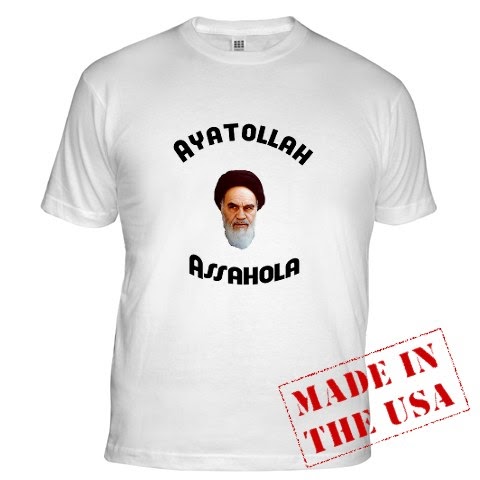
I look forward to our next Iranian conflict so we can bring the above back


One of my all time favorite arcade games.  Best part about it?  If you were controlling the Americans side, it featured a button that triggered a BOOOOOOOO noise to show the Soviet Red Army team who is boss.  If you played the USSR side...you were shit out of luck. 
Nikolai Volkoff.  Thanks WWF for this "Russian" wrestling villain.  When I was seven or eight, I bought a set of "thumb wrestlers," one of which was the gentleman above.  The Iron Sheik gets an honorable mention here.

"If I can change...and you can change...WE ALL CAN CHANGE"  Truer words have never been spoken and while some thank Reagan for the end of the cold war, I thank Stallone.  Though because of Rocky 4, I spent much of my childhood assuming all Russians were blond/blue-eyed thanks to the casting of Dolph Lundgren (above) and Brigitte Nielsen.  Why did Stallone cast a couple of Swedes in the role?  I dunno, Swedes are good looking?


Nuff said.


What's Annoying Me Today?

1)      Is it too much to ask retailers to denote which sunglasses are for men, which are for women, and which are unisexual?  Perhaps I’m an idiot, and when it comes to fashion I’m sure I am, but sunglasses shopping has now become an intimidating experience that has nothing to do with price. Seriously, I find myself cautiously reaching for any pair that might look good out of fear the salesperson will snicker at me for picking up ladies frames.  In fact, I was in Nordstroms this weekend and had to quickly vacate the sunglasses area because I started assuming all the sunglasses were intended for females even though there were some male looking mannequin heads.  But it’s not just me because, in my experience, the salesperson has sometimes even had to consider whether pairs were unisexual or not.  Why?  Because some of them just look identical. Obviously, some frames are clearly intended for female use, but for the rest of them, can I at least get a hint?  I’d really love to avoid a Costanza moment here. 
2)      Coors Light commercials have reached a new low in their attempt to equate the human male to a primal animal.  Have you seen this new commercial that features a dog jumping contest and the Coors Light loving dog?  The one where the guy in the audience is so intent on getting his Coors Light that he disrupts the contest by leaping from the stands to intercept the thrown bottle with his mouth?  Essentially equating him to the K-9?  Nice.  Excuse me while I go to my room to weep for humanity. 
3)      On Real Time this past week, Bill Maher touched on something that’s a pet peeve of mine:  If you post a status on Facebook, you’re not allowed to also “like” it.  This is the internet version of patting yourself on the back.  You wrote it, no shit you like it.   Did you type it, submit it, read it over again, and become so filled with self pride that you tell yourself: “you know what, I did a really good job with that comment.  As a reward, I’m gonna show the world I approve of myself.  There we go, now I feel better.”
4)      People who equate “bold” with “smart.”   I’m not sure when it happened, but at some point recently, people started valuing an opinion with misguided conviction more than a calculated/cautious approach.  I’m not sure when one person’s gamble became a better option than groupthink.
5)      I don’t really have a 5th at the moment.  A good day, I suppose!